North America’s Largest Flexible Warehousing Network
3,500+ warehouses. No leases. Just the space you need.
The pricing benchmark for short-term, on-demand warehousing, updated monthly.
See your estimated savings with pay-as-you-go warehousing.
Instantly find locations and specialized providers to optimize your inventory and handle the unpredictable.
Research, Insights, and Proven Results
By Caroline Thomas, Principal Product Marketer
Last updated: November 13, 2026
Change is constant. Successful enterprises navigate change fast and flexibly. But traditional, fixed warehousing isn’t designed for speed or agility. Instead, traditional fixed warehousing is designed for total control and customization to support high-volume operations, unique products or automation.
And it’s typically a big, fixed-cost investment designed with historical demand in mind.
In response to constant change, leading organizations now focus on complementing fixed warehousing with flexible warehousing.
Flexible warehousing lets organizations scale their networks with demand instead of being locked into long-term leases and fixed costs. Shared space and pay-per-use pricing, backed by technology and operational expertise, cover everything from seasonal peaks and excess inventory to project staging and bulky goods. Add or remove warehouses as needed.
Logistics professionals who are responsible for researching, choosing and influencing business decisions to improve logistics strategies.
Some key initiatives may include:
Whatever the goal, this guide will help inform the next steps in finding the right solution and the right solution provider.
This guide helps logistics leaders understand the difference between fixed and flexible warehousing, and how flexible warehousing can solve current supply chain challenges, optimize logistics networks and help leading enterprises meet their strategic objectives.
Read the guide to:
What are the differences between fixed and flexible warehousing? How should organizations think about each?
Fixed warehousing
Flexible warehousing
Both fixed and flexible warehousing have characteristics that stack up differently and that can be complementary. Depending on business needs, one approach may provide a more optimal solution than the other.
| Fixed: owned and operated | Fixed: leased via third-party logistics provider (3PL) | Flexible warehousing | |
|---|---|---|---|
| Ownership / management | Owned and operated | Leased via third-party logistics provider (3PL) | Supported via flexible warehousing provider |
| Ideal forecasting profile | Stable product lines with significant volume and operational complexity | Stable product lines with significant volume and operational complexity | Product lines with variable volume or seasonality, consumer demand and/or channel growth |
| Investment type | Capital expenditure with minimums and fixed monthly costs | Operating expense with minimums and fixed monthly costs | Operating expense with no time length (project or application specific investment) |
| Startup costs | High to very high | Medium to high | None to low |
| Terms | Fixed | Long-term contracts | Flexible term agreements |
| Location | Fixed | Fixed | Flexible |
| Capacity | Predetermined square footage | Predetermined square footage | Variable, defined by the provider network |
| Software | In-house or purchased warehouse management solution | Uses provider WMS for a fee | Flexible warehousing provider WMS at no cost |
| Integration | In-house solution integrated once over many months | Integration required for each individual logistics provider, typically over months | Single integration provides access to flexible network, in weeks |
| Hardware & other automation equipment | Responsible for purchase and maintenance | Provided at a cost | Included in cost |
| Automation | Customized to support unique business operations | Customized to support unique business operations | Typically not offered |
| Scalability | Complex; limited to footprint and capabilities of owned facility(s); slow and expensive to expand | Moderate; based on available capacity and capabilities in certain markets; slow and expensive to expand | Moderate to easy; based on available capacity and capabilities in certain markets; fast and low-cost to expand |
| Capabilities & value-added services | Responsible | Provided, based on availability | Provided, based on availability |
| Support & issue resolution | Responsible | Provided at a cost | Provided without additional cost |
| Labor | Responsible | Provided at a cost | Provided without additional cost |
| Time to implement | 12 months+ | 2-3 months+ | 2 weeks+ |
| Fixed warehousing | Flexible warehousing | |
|---|---|---|
| Primary strength | Managing complexity. Allows for full control and the ability to customize operations to support high-volume operations, unique product characteristics or automation | Agility. Flexible warehousing lets you scale capacity up or down with demand. You pay only for what you use, with no long-term leases or fixed costs. |
| Primary limitation | Cost to implement. Expensive to implement and maintain; not ideal for responding quickly to change | Managing complexity. Not ideal for operations that need customization for unique product characteristics, require significant automation or are extremely complex |
| Ideal utilization | Stable and predictable forecasts. Ideal for businesses, or portions of businesses, that have stable and predictable forecasts; especially suited for high-volume operations, which are complex, nonstandard or require automation | Dynamic changes, strategic goals and continuous improvement efforts. Ideal for organizations rapidly responding to market changes, such as expanding into new markets, experiencing seasonal peaks, launching new products and consolidating networks |
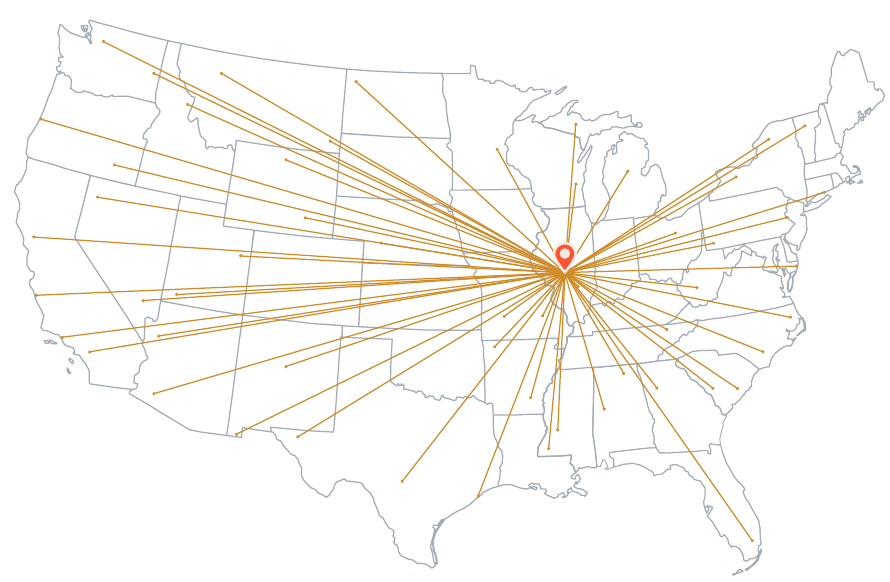
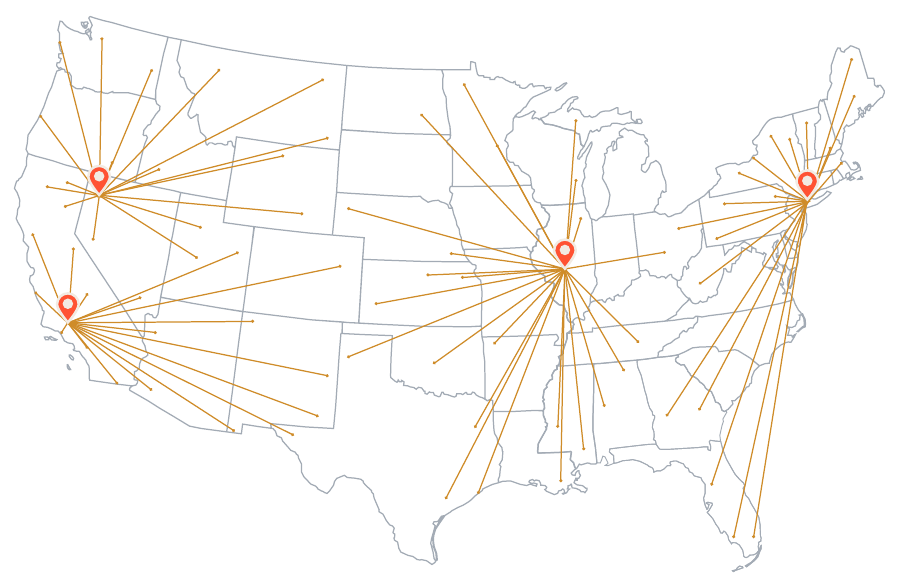
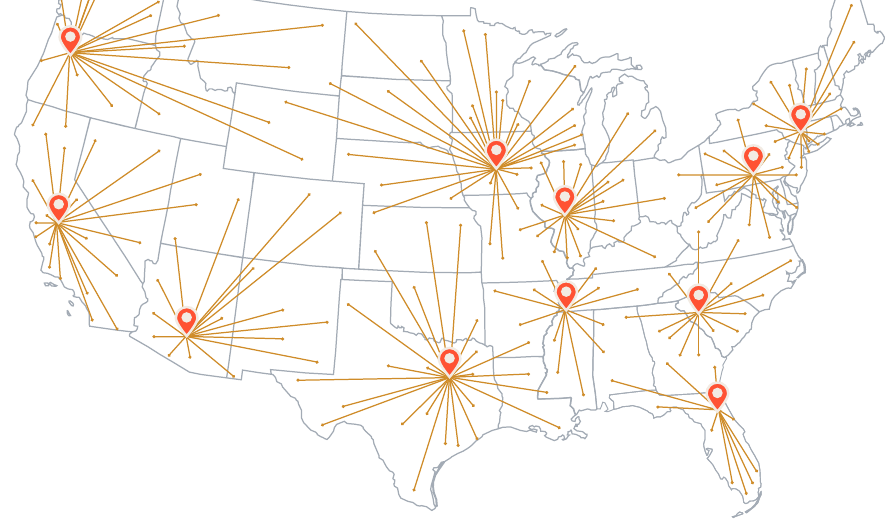
To optimize last-mile delivery for time and costs, inventory must be positioned closer to end consumers, and that requires more facilities. Below is a case study outlining the differences between a fixed warehousing and a flexible warehousing model. It compares the opportunity and outcomes of a business using only its existing third-party logistics providers versus complementing its current fulfillment locations using flexible warehousing.
| Company | Sell Goods Co. |
| Goal | Improve their nationwide ground delivery promise from 3 days to 1 day. |
| Current warehousing infrastructure | Currently in year two of a five-year, fixed lease with a national 3PL (ABC Logistics Co.) |
| % of U.S. reached with 1-day delivery | With a single warehouse, Sell Goods Co. reaches 11% of the U.S. with 1-day delivery, 47% in 2 days and 40% in 3 days. |
| Option 1: Fixed warehousing | Option 2: Flexible warehousing | |
|---|---|---|
| Logistics provider | ABC Logistics Co. | 123 Logistics Co. |
| Relationship | Current 3PL | None |
| Model | Fixed | Flexible |
| Option 1: Fixed warehousing | Option 2: Flexible warehousing | |
|---|---|---|
| Logistics provider | ABC Logistics Co. | 123 Logistics Co. |
| # of available facilities | Three | Unlimited |
| Proposed locations to optimize last-mile delivery | New York, NY; Los Angeles, CA; Reno, NV | Albany, NY; Dallas-Fort Worth, TX; Des Moines, IA; Fort Wayne, IN; Fresno, CA; Greenville, SC; Harrisburg, PA; Jacksonville, FL; Memphis, TN; Phoenix, AZ; Portland, OR |
| % of U.S. reached with 1-day shipping | 40% | 91% |
| Ground parcel transportation costs | $100.3M | $63.5M |
| Maximum capacity | Fixed, 60,000 square feet maximum | Flexible, 120,000 square feet + |
| Lease duration / terms | 5-year leases required for each additional warehouse | N/A |
| Pricing structure | Fixed monthly fee | Transactional fees based on storage plus inbound/outbound handling |
| Expenses | Start-up fee; fixed facility costs; inventory carrying costs | Inventory carrying costs |
| Labor | Fixed based on labor minimums | Transactional fees based on volumes |
| Customer support | Available 24/7 at $15.00/hr. | Available 24/7, free |
| Integrations | Already integrated to 3PL | Single integration required |
| Weeks to launch date | 16 | 8 |
Current solution

Current solution + fixed warehousing

Current solution + flexible warehousing

Enterprises don’t have to choose. Complementing fixed warehousing with flexible warehousing is a dynamic approach that improves logistics networks.
With a flexible approach, businesses get the best of both worlds: using the fixed portion of their network to manage volume, automation and complexity, then complementing operations with flexible warehousing to expand (or contract) network capabilities quickly.
Some businesses start small with flexible warehousing to solve a specific problem and gradually expand their flexible footprint as the advantages and additional opportunities become clear.
When flexible warehousing complements a fixed warehousing approach, it provides:
Every company must design its warehousing network to improve customer experience, mitigate disruptions, create operational efficiencies and achieve strategic goals.
In this section, consider common use cases to understand how flexible warehousing solves them. Compare different ways to respond using either a fixed or flexible approach.
Global supply chain disruptions cost large companies, on average, $82 million a year.
Source: Reuters, 2023
48% of all organizations fail to meet at least half of their strategic targets.
Source: “The Strategic Implications of Organizational Communication,” Binyamin Cooper, 2023
90% of consumers say they will buy another brand or item if their preferred choice isn’t available.
Source: The Wall Street Journal, “Brand Loyalty Takes a Hit From Inflation, Shortages,” 2022
Flexible warehousing expands optionality and agility. Complementing fixed warehousing with flexible warehousing won’t prevent supply chain disruptions or business challenges, but it means enterprises can respond quickly and more efficiently.
Here are four example solutions with flexible warehousing:
When you’re dealing with unexpected inventory surges from forward buys or safety stock, flexible warehousing gives you immediate access to extra capacity, so you always have a place to store your goods.
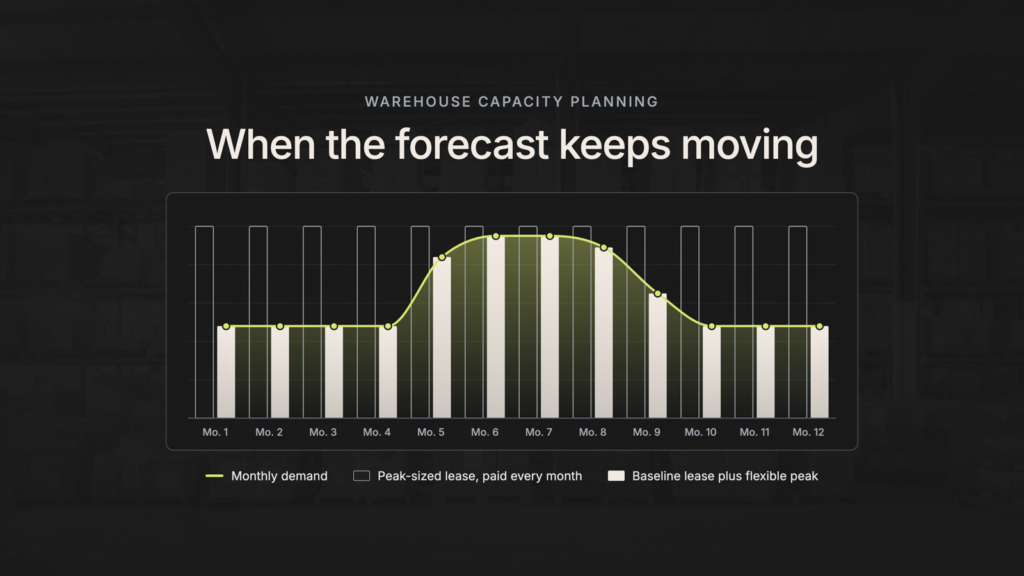
If your business has seasonal cycles or variable demand, flexible warehousing can scale up or down to match your needs, providing real cost savings compared to paying for committed space year-round.
When you have heavy or bulky SKUs that are difficult to automate and expensive to ship, flexible warehousing can strategically place goods closer to demand centers.
Prepare and position everything you need before it’s deployed or used in the final project.
73%
of executives agree flexible supply chains support strategy testing. (Source: “Forecasting in Flux: Navigating Uncertainty Through Strategic Supply Chain Flexibility,” HBR Forecasting in Flux Survey, May 2023)
National beverage manufacturer increases efficiency
Retailer expands footprint by adding network flexibility
Home and garden retailer drives efficiency through network integration
Implementing a new B2B technology solution is no small feat. It requires a deep understanding of the business problem and partnering with a solution provider to solve both immediate and future needs.
Clearly understanding how flexible warehousing complements fixed warehousing opens the door to solving more than just a single problem. It helps businesses address ongoing challenges while supporting future strategic initiatives.
Use the guide and appendix to assess potential solution providers, and discover how flexible warehousing transforms businesses.
What solutions are offered? The ideal flexible warehousing provider is one that can scale and support growth. While only one logistics solution may be needed to pilot, it’s important to understand the types of solutions each provider offers to determine which company can address your needs now and in the future.
Some examples:
What capabilities are supported? Understand what capabilities exist to support different initiatives, from storage to omnichannel fulfillment.
How many warehouses are in the network and where are they located? What regions are served? The size of a provider’s network demonstrates the ability to enter into tight real estate markets. Understand which markets they serve and if there are enough locations and capacity in the required regions. Inquire about the quality of the warehouse providers and how that quality is maintained across multiple providers.
What types of capabilities does the warehouse network have? Depending on current and future needs, get an understanding of what features the warehousing network includes; for example, what percentage of the network is food-grade standard, climate-controlled, dangerous goods capable, sprinklered, transportation assets, etc.?
What does the matching process entail? The best flexible warehousing providers vet every warehouse in the network and have a detailed process for matching customers with warehouse operators.
What is the current customer portfolio? Assess the size of customers the solution providers serve and with what solutions. Get a better idea if the provider is the right fit based on their customer portfolio and how it compares to current and future business needs.
How do the providers’ current customers compare to your organization? There are several types of comparisons. Here are a few:
How is pricing determined? Are there hidden fees? Inquire about the pricing structure and billing to understand how it may differ from current practices in the organization. Ask about transparency in billing, including any costs associated with maintenance or change in scope.
How does billing work? Understand the billing cycle and what the process looks like to inform the Finance team and future planning cycles.
How does technology integration work? With what other systems does it integrate? The best flexible warehousing providers improve operations without requiring multiple new systems. Ensure providers integrate with:
What are the reporting and analytics capabilities? Getting a sense of their reporting and analytics capabilities will show you how easy it will be to obtain required data and insights in the form that you need them. This is also key to knowing everything is working as intended once you’re up and running.
What is the software interface like? Is it user-friendly? Getting the full value of a new technology platform has every bit to do with supporting new operations as it does with basic user experience. The best solutions are intuitive, straightforward and easy to use.
How robust is data security? The best flexible warehousing providers treat data security as a top priority. Get a thorough understanding of the security infrastructure. Connect the provider’s IT leaders with your organization to understand the provider’s level of data security.
How is quality assurance ensured? The right provider can give you a detailed explanation of how quality is maintained. For example:
What are the benchmark SLAs and reporting structure? Understand how the logistics provider measures success daily and quarterly.
What is the onboarding and implementation process? Is training available/included? Go-live is the middle, not the end, of the integration process. No matter how user-friendly the interface is, getting help with onboarding and implementation ensures everything is set up properly. But first, understand what services are involved:
Is live support available? Through what channels and during what hours? Issues and errors aren’t limited to weekdays and business hours. Ensure that live support is available and in what capacity during different times of the week. It’s also critical to understand how different types of issues are resolved. Make sure you feel comfortable and confident about the contingency planning of the provider.
Is there a cost for support or troubleshooting? Avoid being caught off guard by hidden fees. Find out if customer support is a paid or complimentary service.
How long does it take to launch? Enlist a flexible warehousing provider before services are needed to save time and money. Understand what level of process and how much time it would take to get a project up and running once legal is completed.
How scalable are operations? Understand what the requirements are to extend projects and/or expand into new solutions. For example:
What happens at the end? Understand the process of deprecating services once a project has ended. Similarly, it’s equally as important to understand what happens when a project needs to be extended. The key to a flexible warehousing provider is the flexibility that’s actually offered when needs change. For example:
Will they proactively identify efficiencies and opportunities for you? The right flexible warehousing provider won’t just help you act on projects and initiatives that you bring to them; they will serve as an extension of your team, seeking new efficiencies and opportunities with and for you.
Flexe is the largest marketplace of flexible, on-demand warehousing in North America. Founded in 2013 and fueled by its proprietary tech stack, expert operations support, and industry-first pricing and availability benchmark data, Flexe connects enterprises and warehouse operators to bring agility to warehousing, the part of the supply chain still locked into long-term leases.
Flexe is headquartered in Seattle. Its network spans 1,100+ warehouse operators and 3,500+ locations across the U.S. and Canada. The Flexe Spot Warehousing Index benchmarks spot warehousing pricing monthly, nationally and across 21 regional markets. Learn more at www.flexe.com
North America’s Largest Flexible Warehousing Network
3,500+ warehouses. No leases. Just the space you need.
The pricing benchmark for short-term, on-demand warehousing, updated monthly.
See your estimated savings with pay-as-you-go warehousing.
Instantly find locations and specialized providers to optimize your inventory and handle the unpredictable.
Research, Insights, and Proven Results
Get new posts delivered to your inbox.